Why CPG Decision-Making Breaks and Where in the Lifecycle It Happens

Ranjan Kumar

June 16, 2026
CPG decisions move at the speed of quarterly planning. Markets move at the speed of social media. By the time a consumer sentiment shift reaches a portfolio decision, it's already a category problem.
Every CPG strategy team is drowning in data. Nielsen. IRI. SAP. ERP systems. Retailer POS feeds. Social listening dashboards. Demand planning models. Five platforms, five versions of the truth, one quarterly review where someone synthesises it all into a deck and calls it a strategy.
The data is not the problem. The problem is what happens to decisions after they're made.
According to McKinsey and the Institute of Directors, inefficient decision-making costs a typical Fortune 500 company $250 million per year.[1] Harvard Business School estimates that 80% of new products fail - mostly due to poor strategic decisions.[2] And across industries, 67–90% of well-formulated strategies fail not because the plan was wrong, but because the decision was never completed.[3][4]
The reasoning that led to a portfolio call. The assumptions underneath a pricing move. The market thesis that justified an 18-month product development cycle. None of it gets captured in a form anyone can interrogate later. The decision gets made. The meeting ends. The reasoning evaporates.
That's not a data gap. That's a Decision Lifecycle failure.
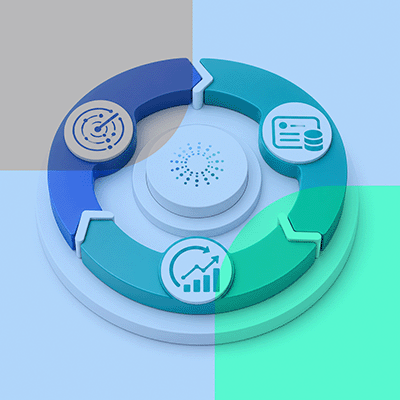
The Decision Lifecycle is the end-to-end process through which a strategic decision moves from signal to institutional learning. First defined and applied to enterprise strategy by Ranjan Kumar at DecisionX, it comprises three stages: Pre-Decision - sensing signals, assembling context, and reasoning before commitment; Decision - making the call and capturing the reasoning as a persistent object; and Post-Decision - tracking assumptions, running root cause analysis, and converting outcomes into compounding institutional knowledge. Most enterprises invest meaningfully in only one of the three.
Below is how CPG scores across all three - based on published research and the structural patterns we observe across consumer goods organisations. Click any stage to see the specific break points and the evidence behind the score.
Any given quarter, the CPG strategy function is wrestling with some version of these. Each requires reasoning across at least three data sources simultaneously:
These questions are asked every quarter. The answers are assembled manually - from five platforms, across two or three functions - under time pressure. McKinsey found that 68% of middle managers and 57% of C-level executives say most of their decision-making time is inefficient.[5]
Let's look at one of the most common high-stakes moves in CPG: launching a new product line into an adjacent health and wellness category in response to consumer trend data.
Every year, category directors in major CPG companies make this call. Consumer research shows a trend. The brand equity seems transferable. The adjacency looks logical. The board approves. An 18-month development cycle begins.
This is precisely the type of cross-cutting decision where McKinsey's data shows only a 54% success rate.[5] What's never captured formally are the three assumptions the entire decision rests on:
The health and wellness trend will sustain long enough to justify the 18-month development cycle.
Existing retail partners will give the new line adequate shelf placement.
The core consumer base will cross-buy rather than substitute - growing the portfolio, not cannibalising it.
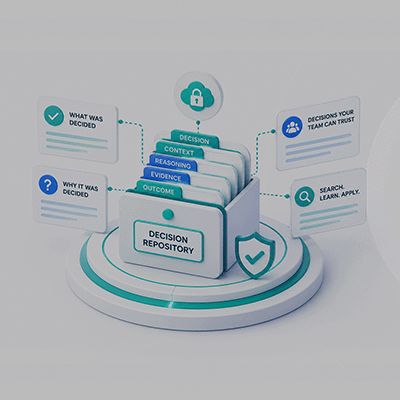
Nobody writes these down as assumptions. They're embedded in the reasoning. Implicit in the confidence. Living in the heads of three or four people in the room the day the decision was made. This is why the Decision stage scores only 34/100 - the call happens, the Reasoning Object doesn't.
Eighteen months later, the new line underperforms. The post-mortem captures the revenue miss. It quantifies the gap against plan. The deck goes to the board.
This is the pattern that compounds quietly in CPG. Not dramatic failure - incremental degradation. Each strategic cycle repeating the reasoning failures of the last without knowing it. Bain & Company found that executives estimate they lose 40% of a strategy's potential value to breakdowns in execution - not to flawed strategy, but to the failure of the infrastructure around it.[6]
Post-Implementation Reviews rarely get converted into organisational learning.[7] In CPG, the average CMO tenure is under four years. Every departure resets the institutional reasoning layer to zero.
Every new CMO or Category Director restarts the same adjacency debate without inheriting the reasoning from the last attempt. The thinking disappears. The institutional cost compounds invisibly, decision cycle by decision cycle. Research shows only 10% of C-level executives successfully implement two-thirds or more of their strategic initiatives in any given year. [8]
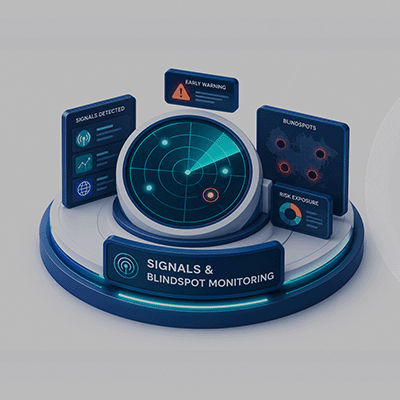
Pre-Decision (58/100) is where CPG is strongest, though still incomplete. Consumer research infrastructure is real. The failure is signal latency and fragmented context. Salesforce research quantifies the downstream cost: data silos cost organisations $7.8M annually in lost productivity.[9]
Decision (34/100) is where CPG's process sophistication collapses. Cross-cutting decisions succeed only 54% of the time.[5] The specific mechanism failure: no Reasoning Object, no documented assumptions, accountability diffuse across CMO, category director, and brand team.
Post-Decision (11/100) is almost universally neglected. Harvard Business Review reports that 67% of well-formulated strategies fail due to poor execution, not flawed planning.[3] Kaplan and Norton's broader estimate puts the failure rate at up to 90%.[4]
In CPG, every quarterly cycle produces decisions. Volume trade-off calls. Pricing moves. Portfolio additions and deletions. Innovation bets. Retailer partnership agreements.
The industry has gotten very good at making these decisions. What it hasn't built is the infrastructure to complete them.
Completion means the reasoning is captured. The assumptions are made explicit and tracked. The RCA - when the decision doesn't land - identifies which assumption was wrong, not just how large the miss was. The next decision that looks like this one inherits the learning from the last.
The trend was read. The research was done. The decision was made. But without the Reasoning Object - without the captured logic, the tracked assumptions, the run RCA - the decision was never completed. And the next person in the room starts from zero.
The brands that compound advantage over time are the ones that treat decisions as living objects - not moments that end when the meeting does.
Decision Made ≠ Decision Done applies the Decision Lifecycle framework - developed by Ranjan Kumar at DecisionX - to the strategic decisions that define each industry. Each article scores Pre-Decision, Decision, and Post-Decision capability and maps where the specific structural failures sit.
Article 1 - D2C · Article 2 - CPG (this article) · Article 3 - Pharma (coming) ·

Ranjan Kumar is the Founder and CEO of DecisionX AI, the world’s first self-learning, context-aware Decision Intelligence platform that enables enterprises to make smarter, faster business decisions through agentic AI. A serial entrepreneur and three-time founder with over 17 years of experience, Ranjan previously built Entropik, the world’s first Emotion AI platform with 17 global patent claims. An IIT Kharagpur alumnus, he is widely recognized as a thought leader in enterprise AI, Ontology Engineering, decision reasoning, and AI-driven business transformation.