Enterprises don't have a strategy problem. They have a completion problem. The decision gets made. The meeting ends. The momentum feels real. And then, somewhere between that room and actual organisational change, the decision quietly dissolves. Not because the thinking was wrong. Because a decision is not a moment. It is a lifecycle. And most organisations have only ever invested in one stage of it.
The problem is not the people in the room. It is everything that happens , and does not happen , around the moment they decide. Over the last year, we examined over 80 enterprise decision-making cycles and found the same pattern every time: decision-making is not an event. It is a process with three distinct stages. Most organisations execute one well. The other two are where the value bleeds out.
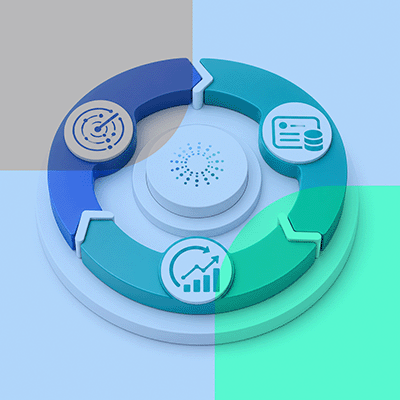
The Decision Lifecycle is the end-to-end process through which an enterprise decision travels , from the first signal that something requires a response, through the act of deciding, to the tracking, execution, and institutional learning that follow. A decision is only complete when all three stages have been executed. Most organisations stop at the middle one.
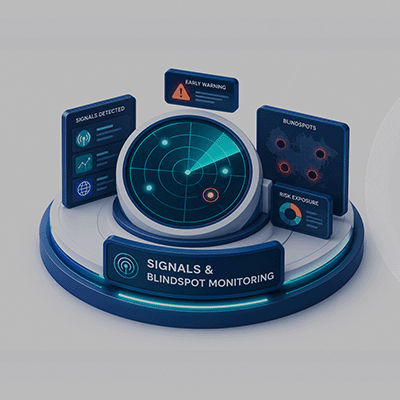
Every consequential decision begins not with a question, but with a signal. A metric that has moved. A competitor that has shifted. A macro trend that has not hit your numbers yet , but will. The organisations that decide well do not wait for the signal to become a crisis. They see it early , across internal data and external context , before it compounds into something that forces the decision rather than invites it.
Nokia had the signals. Their own research teams flagged the touchscreen shift before the iPhone launched. The reasoning existed. It never reached the decision. Middle management filtered upward selectively, and leadership made the call to stay the course on hardware , confidently, on incomplete context. Pre-Decision failed. Everything that followed was downstream of that failure.
Pre-Decision is where decision quality is actually set , not in the boardroom, but in the weeks before anyone walks into it. Most organisations have invested seriously in data infrastructure: tools, analytics stacks, data sources, dashboards. The Part 2 , a workspace to process these data points into unified context and scenarios , remains the missing layer. What-ifs, Scenario Planning, Forecasting, Optimisations each remain an analytics project in themselves, living through Slack, PowerPoint, and email toward the grand decision-making event called the Monthly Review.
In 2000, Blockbuster had the opportunity to acquire Netflix for $50 million. They passed. The outcome was recorded. The reasoning was not. A decade later, when the post-mortem happened, the logic had walked out the door with the executives who were in the room. The organisation could not learn from it because nothing was preserved , just the verdict: we passed.
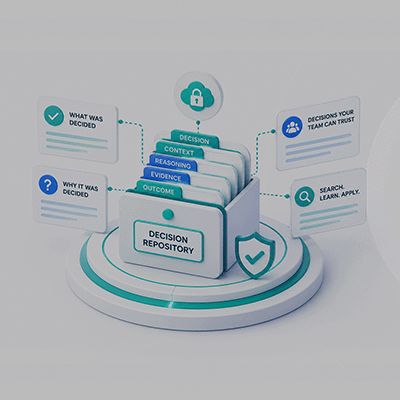
When a decision is captured only as an outcome, the organisation retains the what and loses the why. The next time the same question surfaces , and it always surfaces , it starts from scratch. The people who reasoned through it may have moved on. The context that made the logic valid has shifted. The organisation pays full price to think through it again.
This is where almost all the value is either built or lost. A decision without tracking is a bet without odds. You made the call , but are the assumptions holding? Is the signal that triggered the decision still moving in the direction you anticipated? Are there early indicators that execution is drifting from intent?
Microsoft committed $7.2 billion to Nokia's handset business in 2013. The decision to enter mobile was made. But tracking whether the core assumption , that enterprise loyalty would transfer to mobile consumer behaviour , was holding? Never structured. The signals that it was not working arrived in market share data quarters later, not in early behavioural indicators. The correction window had closed before anyone knew to look for it.
And then there is the question almost no organisation asks formally enough: what did we learn? Not what happened. What did we learn that we can carry forward? Every decision , executed well or badly , contains intelligence. About the market, about the organisation, about where the reasoning was sharp and where it had blind spots. That intelligence is institutional memory. It is one of the most durable competitive advantages an organisation can build. Most organisations let it walk out the door with whoever was in the room.
Three stages. Most organisations invest seriously in one. The other two are where the 20 to 30% bleeds out. The organisations compounding their strategic advantage right now are not necessarily smarter. They are more complete. They have stopped treating the decision moment as the destination and started treating the full lifecycle as the unit of competitive advantage.
Pre-Decision , Surface signals early, internal and external. Reason across scenarios , forecasting, optimisation, stress-testing, correlation , before the window closes.
Decision , Capture not just the outcome, but the object. The reasoning, the assumptions, the alternatives rejected, the context that made the logic valid.
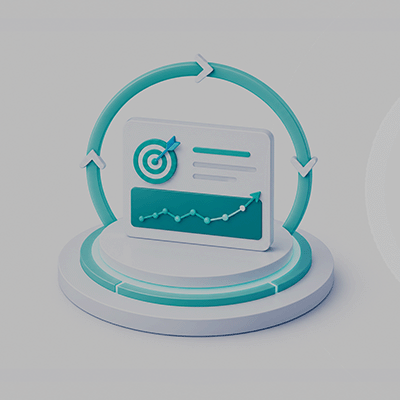
Post-Decision , Track whether the bet is holding. Then learn. Formally. So the next decision starts smarter than the last one.
For decades, enterprises have treated strategy as the source of competitive advantage. But strategy is only a hypothesis. Its value is determined entirely by the quality of the decisions that create it, and the organisation's ability to learn from those decisions over time.
The companies that outperform are rarely the ones that make perfect decisions. They are the ones that shorten the distance between signal, decision, execution, and learning. They spot changes earlier. They reason faster. They preserve context. They recognise when assumptions are breaking. And they feed those lessons back into the next decision. In other words, they compound.
Most organisations think they are managing decisions. In reality, they are managing meetings. The discussion happens. The decision gets made. The action items get distributed. Then the organisation moves on to the next issue as if the lifecycle has ended. But decisions do not create value when they are made. They create value when they are completed.
The future advantage of an enterprise will not come from making more decisions. It will come from becoming systematically better at completing them.
The Decision Lifecycle , Feature Series
This article introduces the Decision Lifecycle framework. Each stage is explored in depth across the series.
Stage 1 , Signals & Blindspot Monitoring · Reasoning · Stage 2 , Decision as Object · Stage 3 , Track, Learn & Compound


Ranjan Kumar is the Founder and CEO of DecisionX AI, the world’s first self-learning, context-aware Decision Intelligence platform that enables enterprises to make smarter, faster business decisions through agentic AI. A serial entrepreneur and three-time founder with over 17 years of experience, Ranjan previously built Entropik, the world’s first Emotion AI platform with 17 global patent claims. An IIT Kharagpur alumnus, he is widely recognized as a thought leader in enterprise AI, Ontology Engineering, decision reasoning, and AI-driven business transformation.